
Micropigmentation Scalp Women: Complete Guide 2026
Women experiencing hair loss face unique challenges that extend far beyond cosmetic concerns. The emotional impact of thinning hair, receding hairlines, and visible scalp areas can profoundly affect self-esteem and daily confidence. Micropigmentation scalp women treatments have emerged as a transformative solution, offering a non-surgical approach to restoring the appearance of natural hair density. This specialized cosmetic technique deposits pigment into the scalp to replicate the look of natural hair follicles, providing women with an immediate, lasting solution to various forms of hair loss.
Understanding Micropigmentation for Female Hair Loss
Micropigmentation scalp women procedures differ significantly from traditional scalp micropigmentation approaches designed for men. Female hair loss patterns typically manifest as diffuse thinning across the entire scalp rather than the concentrated balding patterns common in male pattern baldness. This fundamental difference requires specialized techniques and artistic expertise.
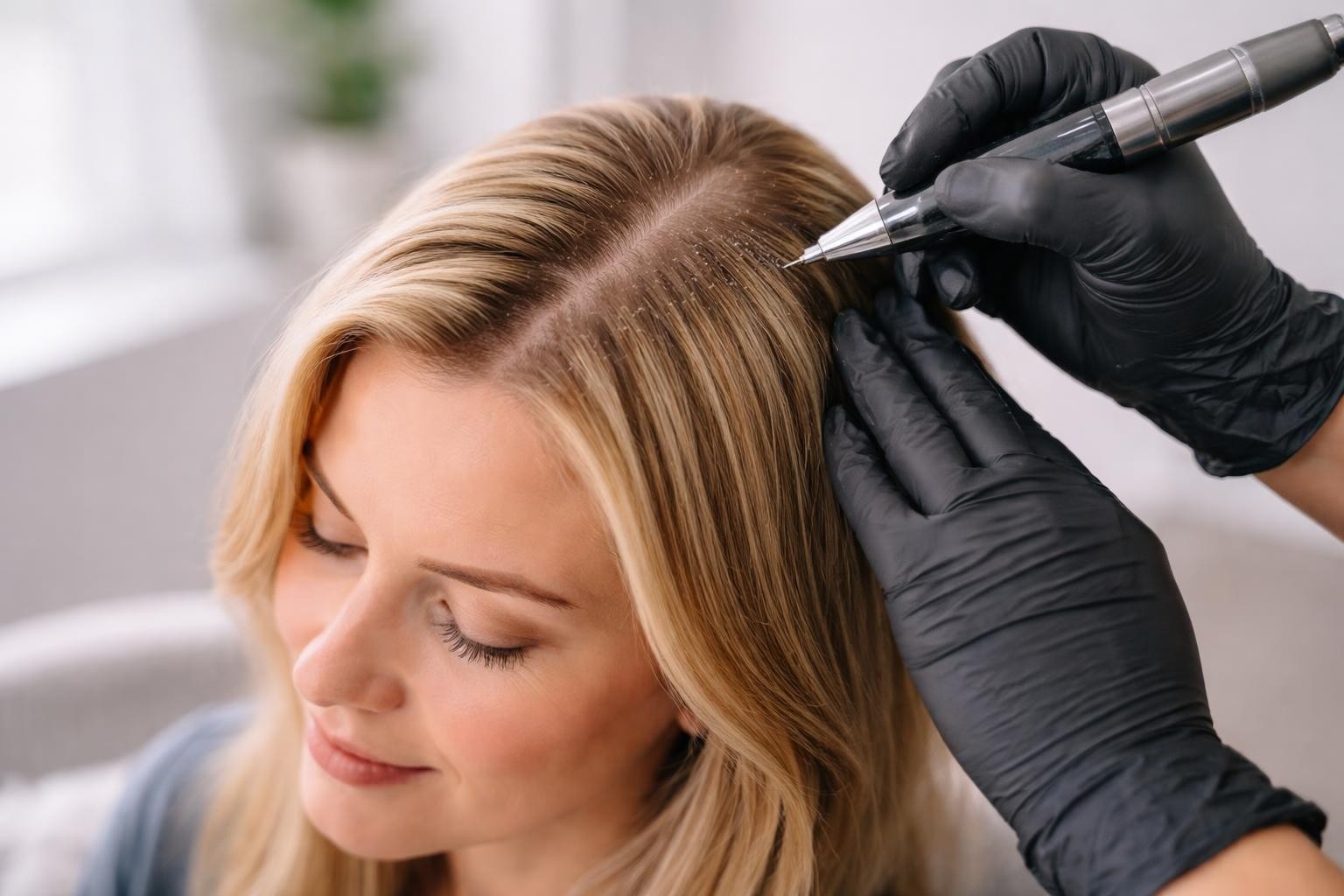
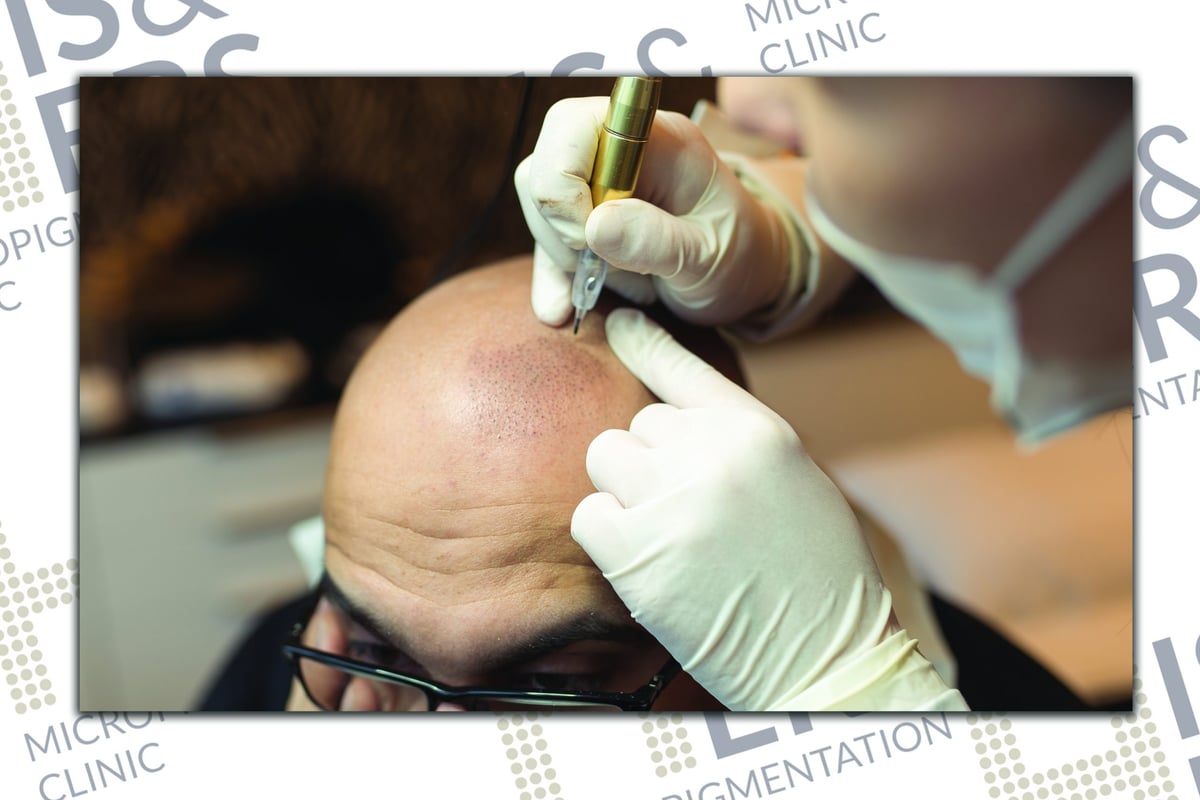
The procedure works by placing thousands of tiny pigment deposits into the dermal layer of the scalp using ultra-fine needles. These deposits create the optical illusion of hair follicles, adding visual density to thinning areas. For women, scalp micropigmentation treatments focus on density enhancement rather than complete hairline recreation, maintaining a natural appearance that complements existing hair.
Key Benefits for Women
The advantages of micropigmentation scalp women treatments extend across multiple dimensions:
- Immediate visual improvement without waiting months for results
- Non-invasive solution eliminating surgical risks and recovery time
- Customizable density tailored to individual thinning patterns
- Lasting results that maintain appearance for years
- Minimal maintenance compared to topical treatments or wigs
- Confidence restoration through natural-looking coverage
Women who undergo this procedure often report dramatic improvements in their daily lives, from styling flexibility to reduced anxiety about visible scalp areas.
Common Causes of Hair Loss in Women
Understanding the underlying causes of hair loss helps determine whether micropigmentation scalp women treatments represent the optimal solution. Female hair loss stems from numerous factors, each requiring different considerations during treatment planning.
Hormonal Changes and Pattern Thinning
Female pattern hair loss affects approximately 40% of women by age 50. This androgenetic alopecia causes progressive thinning across the crown and along the part line. Unlike male pattern baldness, women rarely experience complete hair loss in affected areas, making them ideal candidates for density-enhancing micropigmentation.
Hormonal fluctuations during pregnancy, postpartum periods, and menopause can trigger temporary or permanent hair thinning. Postpartum shedding and hormonal thinning respond particularly well to scalp micropigmentation, as the procedure adds visual fullness while natural regrowth occurs.
Medical Conditions and Treatments
| Condition | Impact on Hair | Micropigmentation Suitability |
|---|---|---|
| Alopecia Areata | Patchy hair loss | Excellent after condition stabilizes |
| Thyroid Disorders | Diffuse thinning | Good with ongoing treatment |
| Chemotherapy | Complete temporary loss | Excellent post-treatment |
| Scarring Alopecia | Permanent follicle damage | Excellent for scar camouflage |
| Trichotillomania | Pulling-related loss | Good with behavioral management |
Women experiencing hair loss due to medical treatments often find micropigmentation scalp women procedures particularly valuable because the results remain consistent regardless of ongoing treatment cycles.
Lifestyle and Environmental Factors
Traction alopecia from tight hairstyles, chemical damage from coloring or processing, and nutritional deficiencies all contribute to female hair loss. These causes often create specific patterns along the hairline or in areas of repeated stress, making them responsive to targeted micropigmentation approaches.
The Treatment Process for Women
The micropigmentation scalp women treatment journey involves several carefully orchestrated phases, each designed to achieve optimal results while respecting the unique characteristics of female hair loss.
Initial Consultation and Design
During the consultation phase, practitioners assess hair loss patterns, discuss aesthetic goals, and create a customized treatment plan. This session addresses critical factors:
- Current hair density in various scalp regions
- Natural hair color and undertones for perfect pigment matching
- Existing hairline shape and desired modifications
- Scalp condition and any underlying skin concerns
- Long-term hair goals including potential future hair restoration
The design process for women requires exceptional attention to natural hair flow patterns and subtle density gradations. Unlike male treatments that often create defined hairlines, micropigmentation scalp women procedures focus on seamless integration with existing hair.
Treatment Sessions
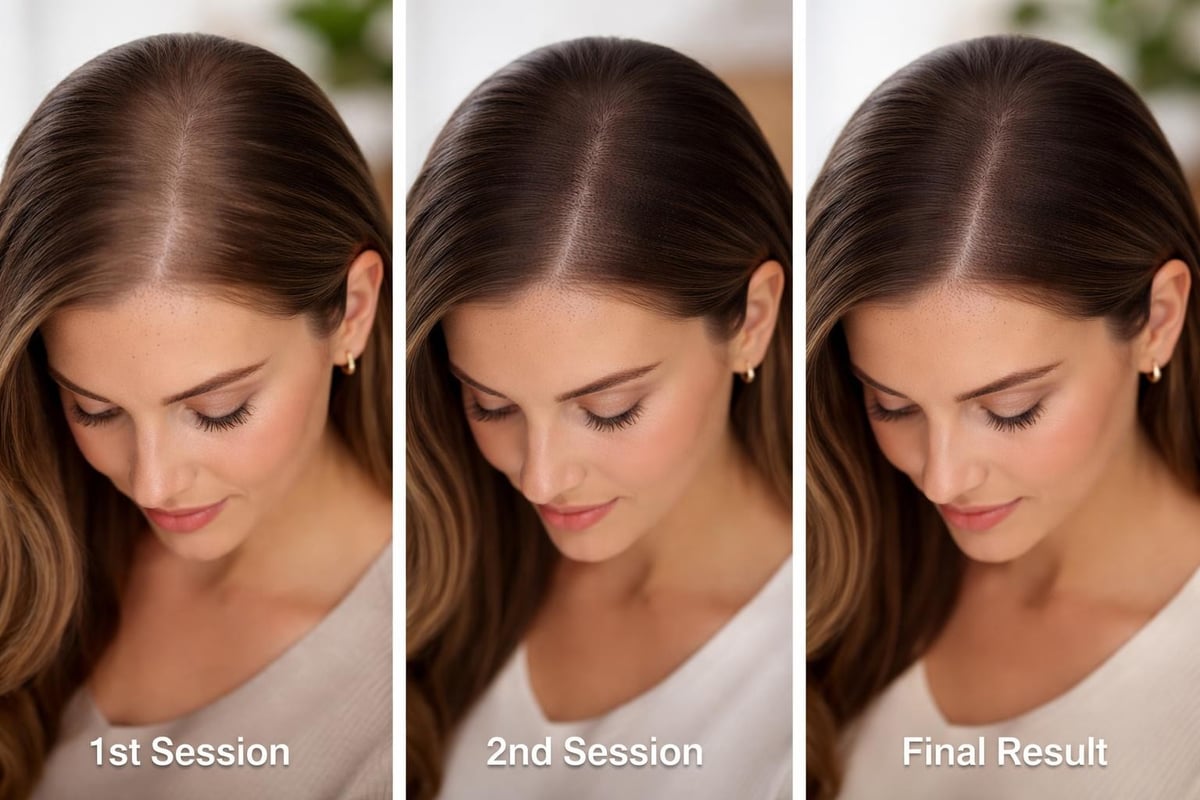
Most women require between two and four sessions spaced 10-14 days apart. This staged approach allows for gradual density building and color adjustment.
Session One establishes the foundation layer with conservative pigment application. Practitioners work conservatively during initial sessions, knowing additional density can be added but removal requires laser intervention.
Session Two builds upon the foundation, adding density and refining color matching. By this stage, women typically notice significant visual improvement.
Session Three perfects the results with final touches and density adjustments. Some women with minimal thinning achieve desired results after two sessions, while others with extensive thinning may benefit from a fourth session.
Pain Management and Comfort
Women frequently express concerns about treatment discomfort. Most clients describe the sensation as tolerable pressure rather than sharp pain. Practitioners apply topical numbing agents to maximize comfort, and many women find the procedure less uncomfortable than eyebrow microblading.
Pain tolerance varies individually, but the majority of women rate their experience between 2-4 on a 10-point scale. Sessions typically last 2-4 hours depending on the coverage area, and breaks can be scheduled as needed.
Customization for Different Hair Types and Colors
Micropigmentation scalp women treatments require exceptional customization to achieve natural results across diverse hair characteristics. The approach varies significantly based on hair color, texture, and existing density.
Blonde and Light Hair Considerations
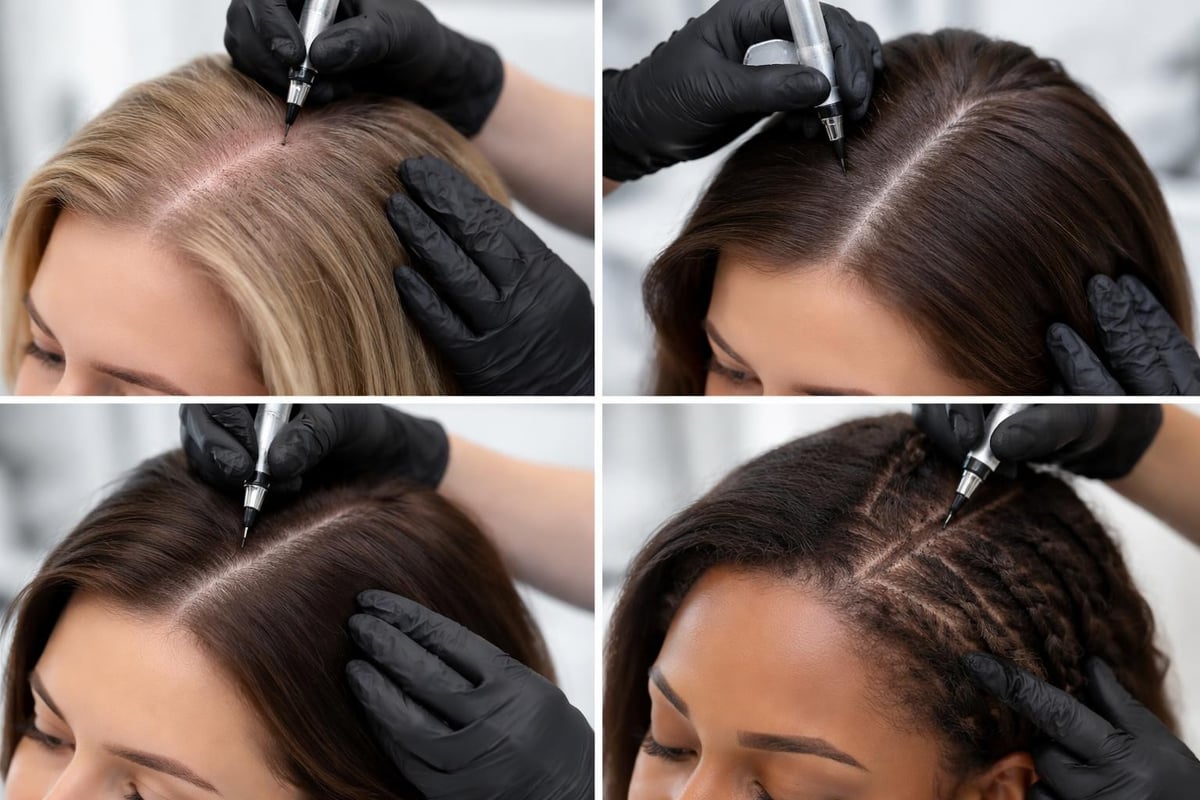
Women with blonde, light brown, or gray hair present unique challenges for scalp micropigmentation. The pigment must be carefully formulated to avoid appearing too dark or obvious against light hair. Practitioners often use softer, warmer tones and apply more conservative density to maintain natural appearance.
Light-haired women benefit from subtle density enhancement rather than dramatic coverage. The goal centers on reducing scalp visibility while preserving the delicate appearance characteristic of naturally light hair.
Dark Hair and High Contrast
Women with dark hair and fair skin require careful balancing to avoid excessive contrast. While darker pigments naturally match their hair color, overapplication can create an artificial appearance. Skilled practitioners understand how to create natural fullness by varying pigment density and working with the natural hair distribution patterns.
Curly and Textured Hair
Curly, coily, and highly textured hair types demand specialized knowledge. The hair's natural lift creates different scalp visibility patterns compared to straight hair. Practitioners experienced with diverse hair textures adjust their technique, often applying slightly denser pigment in areas where curl patterns create more exposed scalp.
Long-Term Results and Maintenance
Understanding the longevity and maintenance requirements of micropigmentation scalp women treatments helps set realistic expectations and ensures lasting satisfaction.
Expected Longevity
Scalp micropigmentation typically maintains its appearance for 3-5 years before requiring touch-up sessions. Several factors influence longevity:
- Sun exposure accelerates fading through UV damage
- Skin type affects pigment retention rates
- Immune response varies individually, impacting how the body processes pigment
- Aftercare compliance during healing directly impacts final results
- Product usage with certain ingredients can affect pigment stability
Women who protect their scalps from excessive sun exposure and follow recommended care protocols typically enjoy results lasting toward the upper end of this range.
Touch-Up Sessions
Annual or biennial touch-up sessions maintain optimal appearance. These appointments require less time than initial treatments and address:
- Natural fading from UV exposure and cellular turnover
- Adjustments for changing hair color (especially relevant for women who color their hair)
- Coverage expansion if thinning has progressed to new areas
- Color refinement to ensure continued natural appearance
Daily Care Requirements
One significant advantage of micropigmentation scalp women procedures is minimal daily maintenance. Unlike wigs, extensions, or topical treatments requiring constant attention, scalp micropigmentation becomes part of your natural appearance.
| Maintenance Aspect | Requirement | Frequency |
|---|---|---|
| Washing | Gentle shampoo | As normal |
| Sun protection | SPF 30+ on scalp | Daily outdoor exposure |
| Moisturizing | Light, non-comedogenic | As needed |
| Touch-ups | Professional session | Every 1-2 years |
| Special products | None required | N/A |
Choosing the Right Practitioner
The success of micropigmentation scalp women treatments depends heavily on practitioner expertise. Women should approach provider selection with careful consideration.
Essential Qualifications
Look for practitioners with specific training in female scalp micropigmentation, as the techniques differ substantially from male treatments. Review portfolios showing diverse hair types, colors, and thinning patterns similar to your own situation.
Certification from recognized training programs demonstrates commitment to professional standards. Additionally, practitioners should maintain proper licensing for cosmetic tattooing procedures according to local regulations.
Portfolio Review Strategies
When examining potential practitioners' work:
- Request before-and-after photos of women with similar hair characteristics
- Look for natural-appearing results where micropigmentation seamlessly blends with existing hair
- Observe color matching accuracy across various lighting conditions
- Assess hairline work for soft, realistic transitions
- Evaluate density variation demonstrating artistic skill rather than uniform application
The specialized cosmetic tattooing procedure creates the appearance of real follicles when performed by experienced professionals, making portfolio review essential to your selection process.
Consultation Questions
During initial consultations, ask specific questions to assess practitioner expertise:
- How many female clients have you treated?
- What pigment brands do you use and why?
- How do you approach color matching for my specific hair color?
- What is your revision policy if I'm unsatisfied with results?
- Can you provide references from previous female clients?
Cost Considerations and Value Assessment
Micropigmentation scalp women treatments represent a significant financial investment requiring careful consideration of costs versus long-term value.
Pricing Structures
Treatment costs typically range from $1,500 to $4,500 depending on coverage area, geographic location, and practitioner experience. Most clinics charge based on:
Coverage extent with partial crown treatments costing less than full scalp coverage
Session numbers required to achieve desired density
Practitioner reputation and demand influencing pricing
Geographic location with metropolitan areas commanding higher rates
Comparing Alternatives
| Solution | Initial Cost | Annual Maintenance | Longevity | Natural Appearance |
|---|---|---|---|---|
| Micropigmentation | $2,000-$4,500 | $200-$400 | 3-5 years | Excellent |
| Hair Systems | $500-$3,000 | $1,000-$2,000 | 6-12 months | Good |
| Topical Treatments | $300-$600 | $300-$600 | Ongoing | Variable |
| Hair Transplant | $4,000-$15,000 | Minimal | Permanent | Excellent |
| Extensions | $500-$2,000 | $1,500-$3,000 | 3-6 months | Good |
When evaluated across multiple years, micropigmentation scalp women treatments often prove more economical than ongoing expenses for topical treatments, hair systems, or extensions.
Five-year cost comparison showing micropigmentation scalp women treatments versus alternative hair loss solutions including wigs, topical treatments, and extensions with maintenance expenses
Addressing Common Concerns and Misconceptions
Women considering micropigmentation scalp treatments often harbor concerns based on misconceptions or incomplete information. Understanding the realities helps make informed decisions.
Will It Look Like a Tattoo?
Modern micropigmentation scalp women procedures bear no resemblance to traditional tattoos. Specialized equipment, techniques, and pigments designed specifically for scalp application create results that mimic natural hair follicles. The pigment sits in the dermal layer at precise depths to maintain natural appearance without spreading or turning blue-green like body tattoos.
Can I Still Color My Hair?
Yes, women can continue coloring their hair after micropigmentation treatments. However, timing matters. Wait at least four weeks after your final micropigmentation session before applying hair color. When coloring, protect treated areas from direct bleach contact, as harsh chemicals can affect pigment appearance.
What About Hair Regrowth Treatments?
Micropigmentation complements rather than conflicts with hair regrowth treatments. Women using minoxidil, finasteride (off-label), low-level laser therapy, or pursuing hair transplants can safely combine these approaches with scalp micropigmentation. Understanding how SMP serves as an effective solution alongside other treatments helps women develop comprehensive hair restoration strategies.
Healing and Downtime
The healing process for micropigmentation scalp women treatments progresses quickly with minimal lifestyle disruption. Immediately following treatment, the scalp appears slightly red with visible pigment dots. This initial appearance softens within 24-48 hours.
Days 1-3: Keep scalp dry and avoid sweating
Days 4-7: Light flaking may occur as the skin heals
Days 8-14: Pigment settles into final color and appearance
Weeks 2-4: Complete healing before next session
Most women return to work the following day, as any redness can be concealed with existing hair. Avoid swimming, saunas, and intense exercise for one week post-treatment.
Realistic Expectations and Success Stories
Setting appropriate expectations ensures satisfaction with micropigmentation scalp women treatments. Understanding what the procedure can and cannot achieve prevents disappointment.
What Micropigmentation Accomplishes
The treatment excels at:
- Creating the illusion of fuller, denser hair when viewed from normal social distances
- Reducing scalp visibility through thinning areas and along part lines
- Restoring confidence in social and professional situations
- Providing consistent appearance regardless of humidity, wind, or activity
- Camouflaging scars from previous procedures or injuries
What Micropigmentation Cannot Do
Realistic expectations include understanding limitations:
- Does not stimulate hair growth or prevent future hair loss
- Cannot replace hair texture or volume for styling purposes
- Requires touch-ups to maintain optimal appearance over time
- May need adjustments as natural hair color changes with age
Real Results from Women
Women who undergo micropigmentation report transformative experiences. Many describe renewed confidence in situations previously avoided, such as swimming, windy conditions, or bright overhead lighting. The psychological benefits often exceed the purely cosmetic improvements.
Professional women note particular appreciation for the consistency micropigmentation provides. Unlike topical treatments requiring daily application or hair systems needing constant adjustment, scalp micropigmentation delivers reliable results day after day.
Special Considerations for Specific Conditions
Certain hair loss conditions require specialized approaches within micropigmentation scalp women treatments.
Alopecia Areata
Women with alopecia areata experience unpredictable patchy hair loss. Micropigmentation works well for stable patches but requires careful timing. Practitioners recommend waiting until patches have remained unchanged for at least six months before treatment, as active alopecia can create new patches requiring additional work.
Scarring Alopecia
Scarring from burns, surgery, or conditions like lichen planopilaris responds exceptionally well to micropigmentation. The procedure effectively camouflages scar tissue where hair follicles no longer exist, creating seamless integration with surrounding hair.
Traction Alopecia
Women experiencing hair loss from tight hairstyles, extensions, or chemical treatments often develop recession along the hairline and temples. Micropigmentation addresses traction alopecia effectively by recreating natural hairline appearance while clients adjust styling practices to prevent further damage.
Combining Treatments for Optimal Results
Many women achieve best results by combining micropigmentation scalp women procedures with complementary treatments. This integrated approach addresses hair loss from multiple angles.
Micropigmentation Plus Hair Transplant
Women undergoing hair transplant procedures often incorporate scalp micropigmentation to enhance density between transplanted follicles. The combination creates fuller appearance than transplant alone, maximizing the aesthetic impact of limited donor hair.
Micropigmentation With Topical Treatments
Continuing minoxidil or other topical treatments after micropigmentation provides both immediate cosmetic improvement and potential for future hair regrowth. The treatments don't interfere with each other and may work synergistically to address different aspects of hair loss.
Micropigmentation and Styling Techniques
Scalp micropigmentation expands styling options for women with thinning hair. Strategic product application and styling techniques maximize the visual benefits:
- Volumizing products add lift at the roots, working with micropigmentation to create fuller appearance
- Strategic parting can showcase areas with optimal micropigmentation coverage
- Texture techniques through styling tools create movement that complements enhanced density
- Color coordination between natural hair and micropigmentation maintains seamless integration
Pre-Treatment Preparation
Proper preparation before micropigmentation scalp women treatments optimizes results and minimizes complications.
Two Weeks Before Treatment
- Discontinue blood thinners if medically approved (consult your physician)
- Avoid alcohol consumption for 48 hours prior to reduce bleeding
- Stop topical treatments like minoxidil temporarily if recommended by practitioner
- Protect scalp from sunburn as tanned or burned skin affects pigment application
Day of Treatment
Arrive with clean, dry hair and scalp. Avoid applying styling products, oils, or conditioners on treatment day. Wear comfortable clothing and plan for sessions lasting 2-4 hours. Bring entertainment like podcasts or audiobooks, as you'll need to remain relatively still during application.
Medical Disclosure
Inform your practitioner about:
- Current medications, especially blood thinners or immune suppressants
- Skin conditions like psoriasis or eczema affecting the scalp
- Previous cosmetic procedures or allergies
- Pregnancy or nursing status
- Autoimmune conditions that may affect healing
Post-Treatment Care for Optimal Results
Following aftercare instructions precisely determines final treatment outcomes for micropigmentation scalp women procedures.
Immediate Aftercare (First 7 Days)
- Keep the scalp completely dry for the first four days
- Apply recommended ointment if provided by your practitioner
- Sleep on clean pillowcases and avoid rubbing treated areas
- Avoid sweating through exercise or heat exposure
- No swimming in pools, oceans, or hot tubs
Extended Healing Period (Days 8-30)
Once initial healing completes:
- Gentle washing with mild, fragrance-free shampoo
- Pat dry rather than rubbing with towels
- Minimal sun exposure with SPF protection when outdoors
- Avoid harsh chemicals including hair dyes or treatments
- No exfoliating products on treated areas
Long-Term Maintenance
Maintaining results requires ongoing care:
- Daily SPF application when scalp will be exposed to sun
- Gentle cleansing avoiding harsh scrubbing or exfoliation
- Regular moisturizing with appropriate products
- Annual assessment for touch-up needs
- Color coordination if dyeing hair to maintain seamless appearance
Making Your Decision
Deciding whether to proceed with micropigmentation scalp women treatments involves weighing multiple factors against personal priorities and circumstances.
Ideal Candidates
Women who benefit most from scalp micropigmentation typically share certain characteristics:
- Experiencing diffuse thinning rather than complete baldness
- Seeking immediate results without surgical intervention
- Comfortable with permanent cosmetic procedures
- Having realistic expectations about outcomes
- Maintaining stable hair loss patterns
- Prioritizing low-maintenance solutions
When to Consider Alternatives
Some situations suggest exploring other options first:
- Active hair loss that hasn't stabilized
- Very short hair where micropigmentation might show too obviously
- Keloid scarring tendency requiring special consideration
- Budget constraints making quality treatment unaffordable
- Preference for reversible solutions
Questions for Self-Assessment
Before scheduling treatment, honestly answer:
- Am I pursuing this for myself or external pressure?
- Have I researched multiple practitioners and compared approaches?
- Do I understand the commitment including touch-ups and maintenance?
- Are my expectations aligned with realistic outcomes?
- Have I considered how this fits into my overall hair loss management strategy?
Micropigmentation scalp women treatments offer a proven, effective solution for addressing the visual impact of female hair loss with natural, lasting results. By understanding the procedure, selecting qualified practitioners, and maintaining realistic expectations, women can achieve the confidence-boosting density enhancement they seek. HIS&HERS Micropigmentation Clinic specializes in creating customized scalp micropigmentation solutions tailored to the unique needs of women experiencing hair thinning, combining technical expertise with artistic sensibility to deliver results that restore both appearance and confidence.
Leave a Reply